When your home sits on the waterfront in Gig Harbor, buyers are not just comparing square footage. They are comparing views, light, lifestyle, and the feeling they get the moment they see your listing online. In a market where presentation can shape perceived value, strategic staging helps your property stand out for the right reasons. If you want to understand how staging supports stronger photos, better buyer response, and a more polished sale strategy, let’s dive in.
Why staging matters in Gig Harbor
Gig Harbor waterfront homes operate in a very different price tier than the broader county market. According to NWMLS waterfront market data, Gig Harbor waterfront houses sold at a median price of $1.35 million in 2024, while the 2025 median closed sales price across Pierce County residential homes and condos was $565,000. That gap matters because higher-end buyers tend to expect stronger presentation from the start.
The same NWMLS market report notes that active listings in Pierce County were up 27.7% year over year, and Redfin reported Gig Harbor’s overall March 2026 median sale price at $884,500, with homes averaging about 24 days on market and roughly two offers. In practical terms, buyers still have choices. When your home is competing against other desirable properties, staging can help create clarity, urgency, and a stronger sense of value.
Staging helps buyers picture life there
One of the clearest reasons staging works is simple: it helps buyers imagine themselves in the home. In the National Association of Realtors 2025 Profile of Home Staging Snapshot, 83% of buyers’ agents said staging makes it easier for buyers to visualize a property as a future home.
That effect is especially important for waterfront properties. These homes often sell on emotion as much as features. When rooms feel calm, open, and connected to the water view, buyers can focus on the experience of living there instead of getting distracted by furniture scale, clutter, or overly personal decor.
Online presentation is now the first showing
Before many buyers ever step inside, they have already formed an opinion from the listing itself. Zillow’s 2025 consumer housing trends research found that 68% of prospective buyers had already viewed homes for sale on a real estate website, and the features they valued most were floor plans, high-resolution photos, and 3D or virtual tours.
That means staging is not only about preparing for in-person showings. It is also about preparing for the digital first impression. If your waterfront home photographs beautifully, reads clearly in a floor plan, and feels cohesive on video, buyers are more likely to book a showing and arrive with stronger interest.
Key rooms that deserve attention
Not every space carries the same weight with buyers. According to the NAR 2025 home staging report, buyers’ agents most often identified the living room as the most important room to stage, followed by the primary bedroom and kitchen.
For a Gig Harbor waterfront home, those priorities make sense. The living room often frames the main view and sets the emotional tone of the house. The primary bedroom supports the lifestyle story, and the kitchen often signals how the home functions day to day and when entertaining.
Focus on the living room
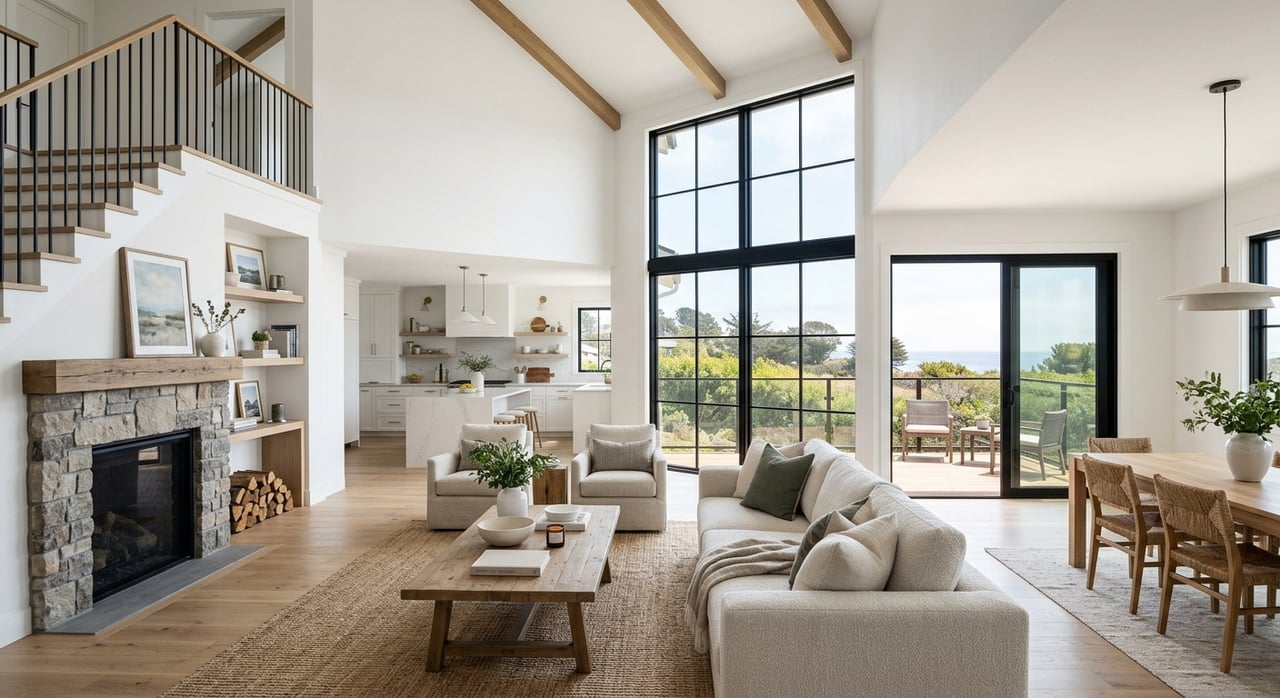
If your living room overlooks the water, staging should support that feature instead of competing with it. Lower-profile furniture, simpler accessories, and a cleaner layout can help create clear sightlines to the view. The goal is to make the water and natural light feel like the centerpiece.
Refine the primary bedroom
The primary bedroom should feel restful and spacious. Neutral bedding, fewer personal items, and balanced furniture placement can make the room feel more elevated in photos and in person. Buyers should be able to picture a retreat, not someone else’s routine.
Simplify the kitchen
In the kitchen, less is often more. Clear counters, edited decor, and fresh, bright surfaces can help the space feel move-in ready. Because buyers often judge maintenance and overall condition from kitchens and baths, even small presentation improvements can have an outsized impact.
The highest-impact changes are often simple
Many sellers assume staging means a major redesign or expensive update. In reality, the NAR 2025 home staging report shows that the most commonly recommended seller improvements were:
- Decluttering the home
- Whole-home cleaning
- Improving curb appeal
- Professional photos
- Minor repairs
- Carpet cleaning
- Depersonalizing
- Paint touch-ups
- Landscaping outdoor areas
For many Gig Harbor waterfront sellers, the biggest wins come from editing rather than adding. Oversized furniture can make good rooms feel tight. Heavy window treatments can block natural light. Too many personal items can make it harder for buyers to connect emotionally with the space.
Waterfront staging should highlight the view
Waterfront homes have a different visual priority than many inland homes. The home itself matters, of course, but the setting is often part of the value story. Strategic staging should help buyers read the relationship between interior spaces, decks or patios, and the water beyond.
In practical terms, that often means:
- Opening view corridors from main living spaces
- Reducing furniture that interrupts sightlines
- Simplifying window treatments
- Brightening decks, patios, and outdoor seating areas
- Creating a calm, cohesive backdrop for photography
When the home feels like a frame for the setting, buyers can more easily appreciate what makes the property special.
Staging can support perceived value
Staging is not a guarantee of a higher sales price, and every listing is different. Still, NAR’s 2025 staging report found that 17% of buyers’ agents believed staging increased the dollar value offered by 1% to 5% compared with similar unstaged homes, while 10% reported a 6% to 10% lift. These are agent-reported perceptions, but they point to an important truth: presentation can influence how buyers judge value.
In a premium segment like Gig Harbor waterfront, that perception matters. Buyers who feel a home is well prepared, well cared for, and visually compelling may be more willing to act decisively. At the very least, strong staging can help support your asking price by reducing friction in the buyer’s first impression.
Physical staging still carries more weight
Virtual staging can be useful in certain situations, but it should not replace real preparation. The NAR 2025 report found that buyers’ agents placed greater importance on photos, traditional physical staging, videos, and virtual tours than on virtual staging.
That distinction matters for waterfront sellers. If buyers arrive after seeing idealized images online but encounter a home that feels crowded, dim, or unfinished in person, momentum can fade quickly. Physical staging helps ensure the listing experience and the showing experience feel aligned.
Marketing and staging work together
Even the best staging only pays off if the right buyers see it. That is why staging should be part of a broader marketing plan, not a stand-alone step. The visual story created through design, editing, and preparation needs to carry through photography, floor plans, video, and listing distribution.
Realogics Sotheby’s International Realty marketing services describe a media-forward approach that includes print, digital, public relations, social media, tailored property branding, and video exposure across major brand platforms. For distinctive waterfront and view homes, that kind of reach helps polished presentation travel farther than the local audience alone.
This approach lines up with broader buyer behavior. Zillow’s research shows buyers are starting online, and its marketing guidance notes the value of professional photography, 3D tours, and public MLS exposure. When staging and media are planned together, your home has a better chance of making a strong impression from the very first click.
What staging typically costs
Sellers often ask whether staging is worth the investment. According to the NAR 2025 home staging report, the median spend for a staging service was $1,500. The biggest factors in choosing a staging company were the quality of the design and the price of the service.
That cost can be modest relative to the value of a Gig Harbor waterfront property. More importantly, effective staging is often part of a larger strategy to protect value, improve marketing assets, and reduce the chances of your home feeling overlooked in a competitive set.
A smart staging plan for waterfront sellers
If you are preparing to sell, a practical staging strategy usually starts with the basics and builds from there. You do not need to guess which changes matter most.
A smart pre-listing plan may include:
- Declutter and depersonalize key spaces.
- Deep clean the entire home.
- Complete minor repairs and paint touch-ups.
- Refresh curb appeal and outdoor entertaining areas.
- Stage the living room, primary bedroom, and kitchen first.
- Schedule professional photography, floor plans, video, and tours after staging is complete.
For waterfront homes, the best results usually come from combining thoughtful preparation with pricing, positioning, and marketing that reflect the property’s niche appeal.
If you are considering a sale, working with a team that understands both waterfront buyer expectations and premium presentation can make the process much more strategic. Lori DeVore offers boutique guidance, staging and design insight, and polished marketing tailored to distinctive South Puget Sound homes.
FAQs
What does home staging mean for a Gig Harbor waterfront property?
- Home staging means preparing the property so its layout, natural light, and water views show as clearly and attractively as possible in photos, video, and in-person tours.
Does staging really help sell waterfront homes in Gig Harbor?
- NAR reports that 83% of buyers’ agents say staging helps buyers visualize a property as a future home, which can be especially important in a premium, image-driven waterfront market.
Which rooms should sellers stage first in a Gig Harbor home?
- Based on NAR data, the living room, primary bedroom, and kitchen are the highest-priority spaces because they often shape buyer impressions most strongly.
Is virtual staging enough for a Gig Harbor waterfront listing?
- Virtual staging can help in some cases, but NAR respondents rated traditional physical staging as more important than virtual staging, so it should not replace in-person preparation.
How much does home staging usually cost for sellers?
- NAR found the median spend for a staging service was $1,500, though actual costs can vary depending on the size of the home and the scope of work.
What improvements matter most before listing a waterfront home?
- The most commonly recommended updates include decluttering, deep cleaning, curb appeal improvements, minor repairs, depersonalizing, paint touch-ups, landscaping, and professional photography.