If you work in Seattle or commute to JBLM, where you live in Tacoma can shape your day as much as the home itself. Some neighborhoods make transit simpler, some offer better value, and others trade speed for views, privacy, or classic Tacoma character. This guide breaks down the best Tacoma neighborhoods for Seattle and JBLM commuters so you can match your commute, budget, and lifestyle with more confidence. Let’s dive in.
What commuters should know first
Tacoma Dome Station is Tacoma’s main multimodal hub. It is served by the T Line, Sounder S Line, local buses, ST Express, and Amtrak, and the T Line currently runs from Tacoma Dome Station to the Hilltop District.
For Seattle commuters, the Sounder S Line is an important starting point, but it runs on weekdays only. Sound Transit lists travel time from South Tacoma Station to King Street Station at about 70 minutes, while Lakewood to King Street Station is about 75 minutes.
For JBLM commuters, transit options exist but depend on where you live and whether you have base access. Pierce Transit Route 206 serves JBLM Madigan Hospital and Lakewood Transit Center, and the JBLM Runner zone serves Lakewood and McChord Air Base during weekday commute periods. Riders entering JBLM must have approved DoD ID.
Price also matters when you compare neighborhoods. Tacoma’s current median listing price is about $529,950, while Redfin’s March 2026 median sale price was about $485,000. Since those are different data points, they work best as broad market snapshots rather than one exact benchmark.
Best Tacoma areas for Seattle commuters
Downtown and New Tacoma
If rail access is your top priority, Downtown and New Tacoma are some of the clearest choices. This part of the city sits closest to Tacoma Dome Station, which makes it the most directly tied to Tacoma’s current transit network.
The City of Tacoma describes North Downtown as a mix of commercial, historic, and multifamily districts. It also identifies Downtown Tacoma, including nearby Hilltop and the Stadium District, as one of the city’s two regional growth centers, which helps explain why this area feels more transit-oriented than most of Tacoma.
Current median listing prices in Downtown and New Tacoma are about $419,900. That places this area below Tacoma’s broader listing median, which may appeal if you want a more urban setting and easier transit access without moving to a higher-priced submarket.
Central Tacoma and Hilltop
Central Tacoma is another strong option if you want to stay close to Tacoma’s transit core. Its current median listing price is about $480,000, which still sits below Tacoma’s citywide listing median.
Hilltop fits into the same urban-core commuter conversation because of its connection to Downtown Tacoma and the current T Line route. If you want a neighborhood that keeps you tied into the city’s main transit spine, Central Tacoma and Hilltop deserve a close look.
For many buyers, these areas can strike a practical balance. You stay closer to the Tacoma Dome hub, remain connected to core city services and transit, and often find more approachable pricing than in some of Tacoma’s higher-cost neighborhoods.
Stadium District
The Stadium District belongs in the same general commuter-friendly zone, but it reads a little differently. It is part of Tacoma’s urban core, yet it tends to feel more like a walkable lifestyle district than a direct station neighborhood.
Pricing here is also less straightforward because listing data are thinner. Realtor.com shows no current median home price for Stadium-Seminary due to a smaller sample, while recent listings have ranged from a $270,000 condo to a $1.325 million historic or view home.
If you want character, proximity to Downtown, and a more established urban setting, Stadium may still be a fit. You just may need to be more flexible on both price and exact commute pattern.
Best Tacoma areas for JBLM commuters
South Tacoma
South Tacoma stands out as one of the strongest Tacoma-side value plays for JBLM commuters. The current median listing price is about $417,000, making it one of Tacoma’s more affordable larger submarkets.
This area also offers a transit mix that is stronger than many buyers expect. Sound Transit says South Tacoma Station to Seattle King Street takes about 70 minutes, and Pierce Transit lists Route 3, Route 206, and the JBLM Runner as relevant services for the broader South Tacoma to Lakewood corridor.
The neighborhood itself reflects an older mixed-use pattern along South Tacoma Way, with walkable blocks and buildings near the sidewalk. At the same time, the city notes that larger parking lots and auto-oriented uses remain part of the area, so the feel can vary block by block.
South End
South End is another practical option for buyers focused on value and access. The current median listing price is about $439,950, which keeps it in a relatively affordable range compared with Tacoma overall.
For JBLM commuters, South End works well as part of the broader south-side corridor that connects more naturally toward Lakewood and base-related travel. If you want room to balance price, commute practicality, and access to Tacoma services, this area deserves attention.
It can also be a sensible choice if your household has mixed commute needs. One person may need access toward JBLM while another still wants reasonable access to Tacoma or Seattle transit connections.
Best Tacoma areas for character and neighborhood feel
North End
If your first priority is classic Tacoma character, the North End often rises to the top. Tacoma’s housing plan describes it as mostly residential, with a historic mixed-use pocket and the 6th Avenue corridor adding neighborhood-serving activity.
The tradeoff is price and commute style. Current listing prices are around $725,000, which is well above Tacoma’s broader median, and transit access is more bus- and car-based than what you find closer to the downtown core.
Pierce Transit lists Route 16 for the North End, which can help with local mobility. Still, if your goal is the simplest rail commute to Seattle, this area is less direct than Downtown, Central, or Hilltop.
Proctor
Proctor offers a similar appeal with a distinct neighborhood identity. The city’s neighborhood plan supports a range of housing types here, including ADUs, duplexes, triplexes, fourplexes, cottage housing, cohousing, and small multifamily apartments.
That mix helps explain why Proctor appeals to buyers who want a residential feel with neighborhood retail and a lower-scale built environment. Market data are thinner here than in the broader North End, but Proctor generally sits in the same upper North End pricing tier.
For commuting, Sound Transit’s Tacoma Dome connections list Route 13 to the Proctor District and Route 41 to Downtown Tacoma and Tacoma Mall. That means access is workable, but it is not as direct as living near Tacoma Dome Station itself.
Best Tacoma areas for views and privacy
Northeast Tacoma
If you are willing to trade commute efficiency for views, privacy, and a quieter suburban feel, Northeast Tacoma may stand out. Current median listing price is about $707,500, and the median sale price is about $733,500.
This is a higher-cost, more car-oriented part of the market. Redfin shows Northeast Tacoma with a Walk Score of 23 out of 100, which supports the idea that daily life here is generally car-first.
For some buyers, that is exactly the appeal. If your priority is space, outlook, and a more tucked-away feel, Northeast Tacoma may deliver a lifestyle that outweighs a less convenient transit setup.
Browns Point
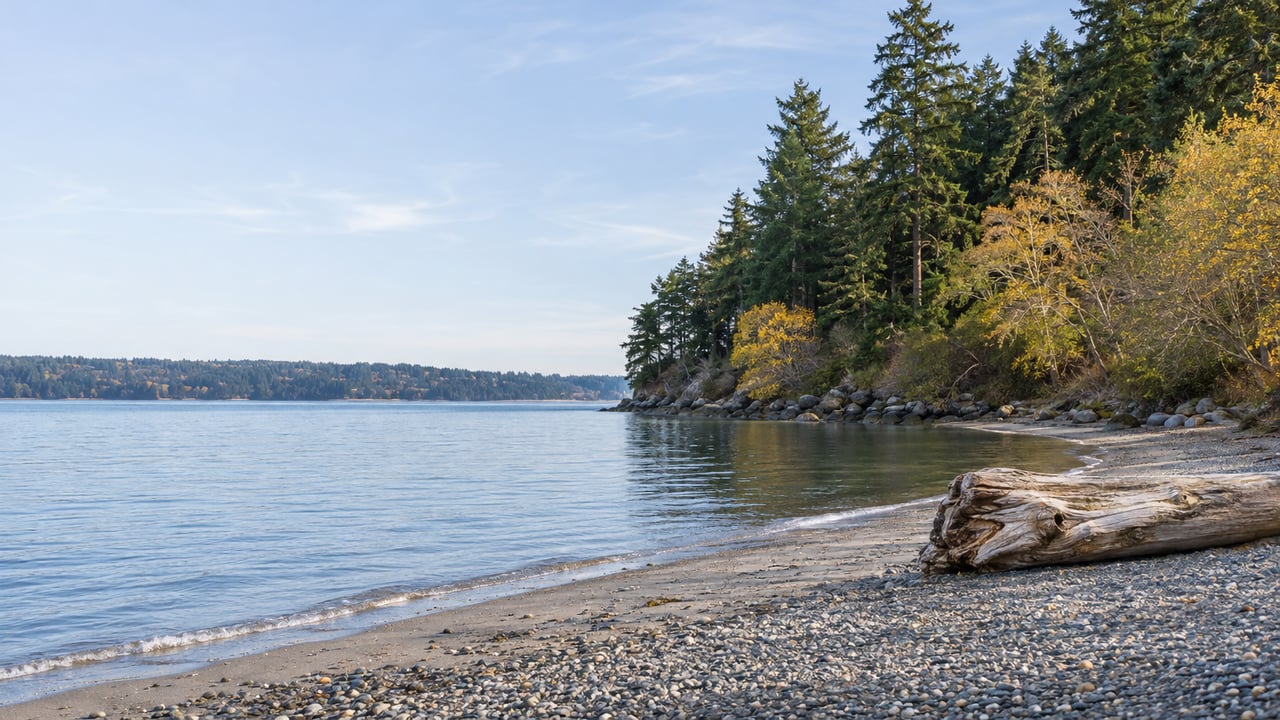
Browns Point fits a similar profile. Tacoma planning documents describe the Browns Point-Dash Point area as primarily single-family residential, with a small amount of multifamily housing and a commercial area along Marine View Drive.
The city’s planning guidance also points to a low-density residential pattern, while shoreline planning documents note shoreline access points such as Browns Point Lighthouse Park and Dash Point Park. Median sale price in Browns Point is about $745,000, placing it in the upper end of Tacoma-area pricing.
For relocation buyers or move-up buyers, Browns Point can be compelling if your commute is car-based and your home priorities center on setting, privacy, and views. It is simply a different answer to the commuter question than Downtown or South Tacoma.
How to choose the right neighborhood
The best Tacoma neighborhood for your commute depends on what you are optimizing for. If you want the most direct Seattle rail setup, focus first on Downtown, New Tacoma, Central, and Hilltop.
If you want JBLM access with better value, South Tacoma and South End stand out. If you want classic Tacoma charm, North End and Proctor may be worth the extra cost or commute tradeoff.
If you want views and a quieter setting, Northeast Tacoma and Browns Point offer a very different lifestyle. These areas can be especially appealing to buyers relocating to South Puget Sound who care as much about long-term enjoyment of the property as they do about daily drive time.
In practice, many buyers are balancing more than one goal. You may be comparing weekday commute convenience, weekend lifestyle, housing style, and long-term resale potential all at once. That is where a neighborhood-by-neighborhood strategy can save you time and help you avoid expensive compromises.
Whether you are relocating for work, buying your first Tacoma home, or searching for a view property that still supports your routine, local guidance makes a difference. If you want help comparing Tacoma neighborhoods, commute patterns, and home options, reach out to Lori DeVore for thoughtful, high-touch guidance tailored to your goals.
FAQs
Which Tacoma neighborhoods are best for commuting to Seattle by rail?
- Downtown/New Tacoma, Central, and Hilltop are the clearest current choices because they sit closest to Tacoma Dome Station, Tacoma’s main transit hub.
Which Tacoma neighborhoods are best for commuting to JBLM?
- South Tacoma and South End are strong options for JBLM commuters because they offer relatively affordable pricing and useful connections toward Lakewood, Route 206, and the JBLM Runner service.
Is Tacoma Dome Station important for Seattle commuters in Tacoma?
- Yes. Tacoma Dome Station is Tacoma’s main multimodal hub, with service from the T Line, Sounder S Line, local buses, ST Express, and Amtrak.
Are North End and Proctor good for commuters in Tacoma?
- They can be, especially if you value neighborhood character, but they are generally more bus- and car-oriented than Tacoma’s downtown core and are less direct for Seattle rail access.
Are Northeast Tacoma and Browns Point good for commuters?
- They can work for buyers who prefer a car-first commute and want views, privacy, or a quieter suburban setting, but they are not the strongest fit for maximizing transit convenience.